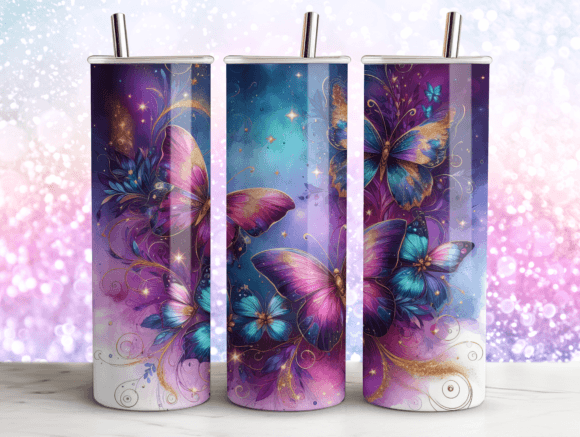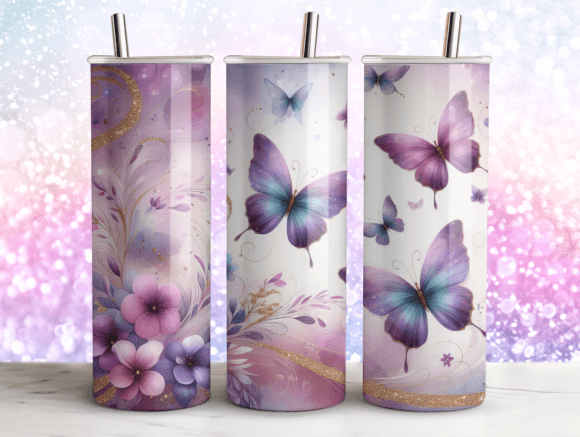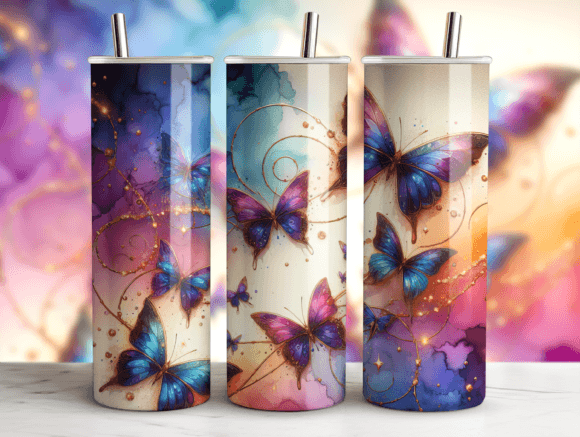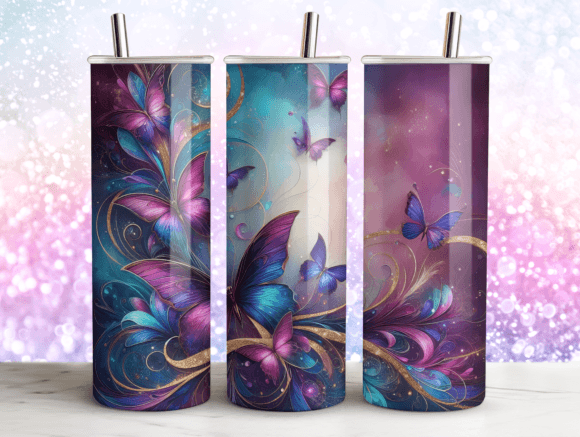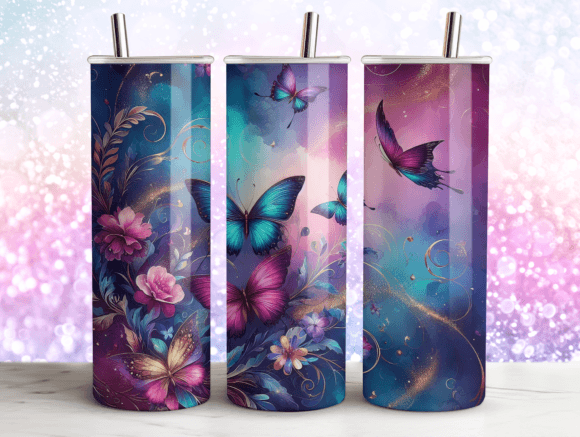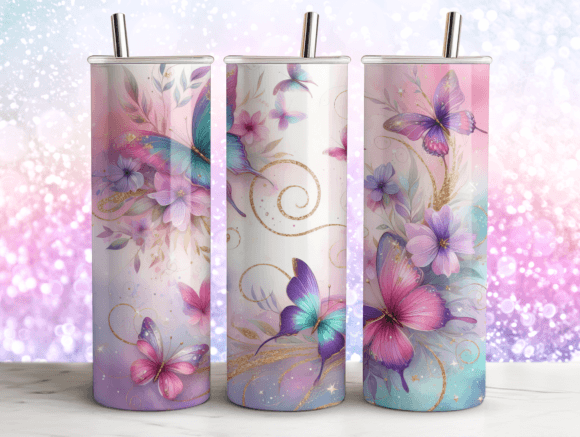
Butterfly Agate Glitter Tumbler Wrap Png
Design Considerations for Specific Projects
Custom Apparel: This design would look stunning on a sweatshirt or t-shirt, especially when paired with neutral colors. The butterfly motif adds a subtle flair that complements casual wear.
Baby Items: For a baby onesie or bib, the design's gentle sparkle is perfect. It adds a touch of elegance without overwhelming the small scale of the project.
Applique Design: If used as an applique, the design’s intricate details make it ideal for items like caps or aprons. Just ensure the hoop size is appropriate for the scale of the design.
Commercial Embroidery: While the design is suitable for commercial use, it’s important to confirm licensing terms before selling finished products. Always check whether the design is intended for commercial reproduction.
Areas to Be Cautious With
Small Hoop Sizes: The design’s level of detail may not translate well to smaller hoops, leading to a loss of clarity. Test it on scrap fabric first to ensure it stitches properly.
Dark Fabric: As mentioned earlier, the glitter effect may not show up well on dark backgrounds. Consider using lighter-colored fabric or adjusting the thread color for better visibility.
Textured Fabrics: On fabrics with a lot of texture, such as denim or canvas, the design may appear distorted. Proper stabilizer use is essential here.
Curved Surfaces: The design works best on flat surfaces. If applying it to a curved item like a cap, ensure the stitching path allows for smooth placement.
Practical Design Notes for Embroidery Professionals
Test on Scrap Fabric: Always run a test stitch before proceeding with the final product. This helps catch any issues with stitch density or color contrast early.
Check Thread Color Contrast: Ensure the thread colors complement the design and fabric. Brighter threads can enhance the glitter effect, while muted tones offer a more subdued look.
Review Stitch Density: A higher stitch density can improve detail but may increase stitching time. Balance is key based on the project’s requirements.
Confirm Hoop Size: Make sure the hoop size is compatible with the design’s dimensions. Too small, and details will be lost; too large, and the design may not fit properly.
Use Proper Stabilizer: Especially on stretchy or textured fabrics, a good stabilizer can make all the difference in the final outcome.
Consider Light and Dark Backgrounds: Test the design on both light and dark fabrics to ensure it looks good in all contexts.
Check Licensing Terms: Before selling finished products, verify that the design is licensed for commercial use. This protects both the seller and the buyer.